
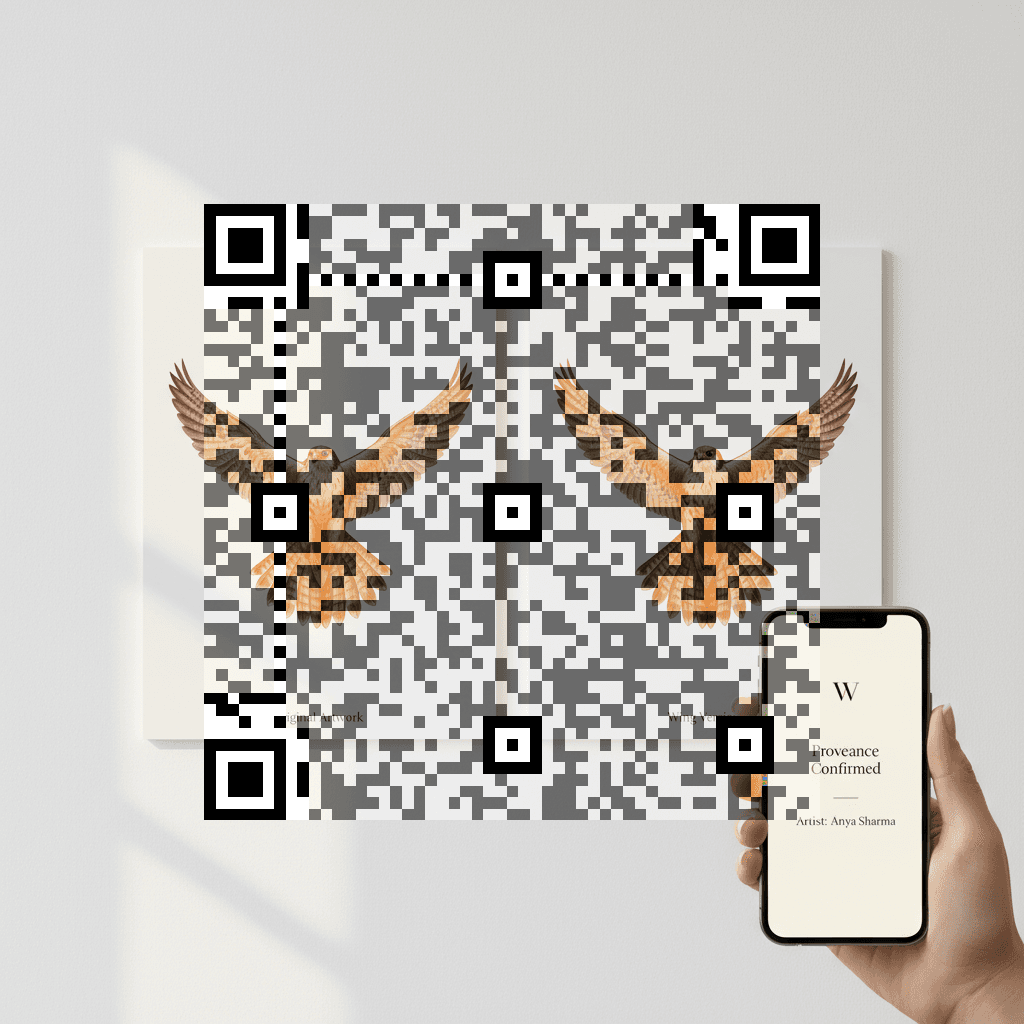
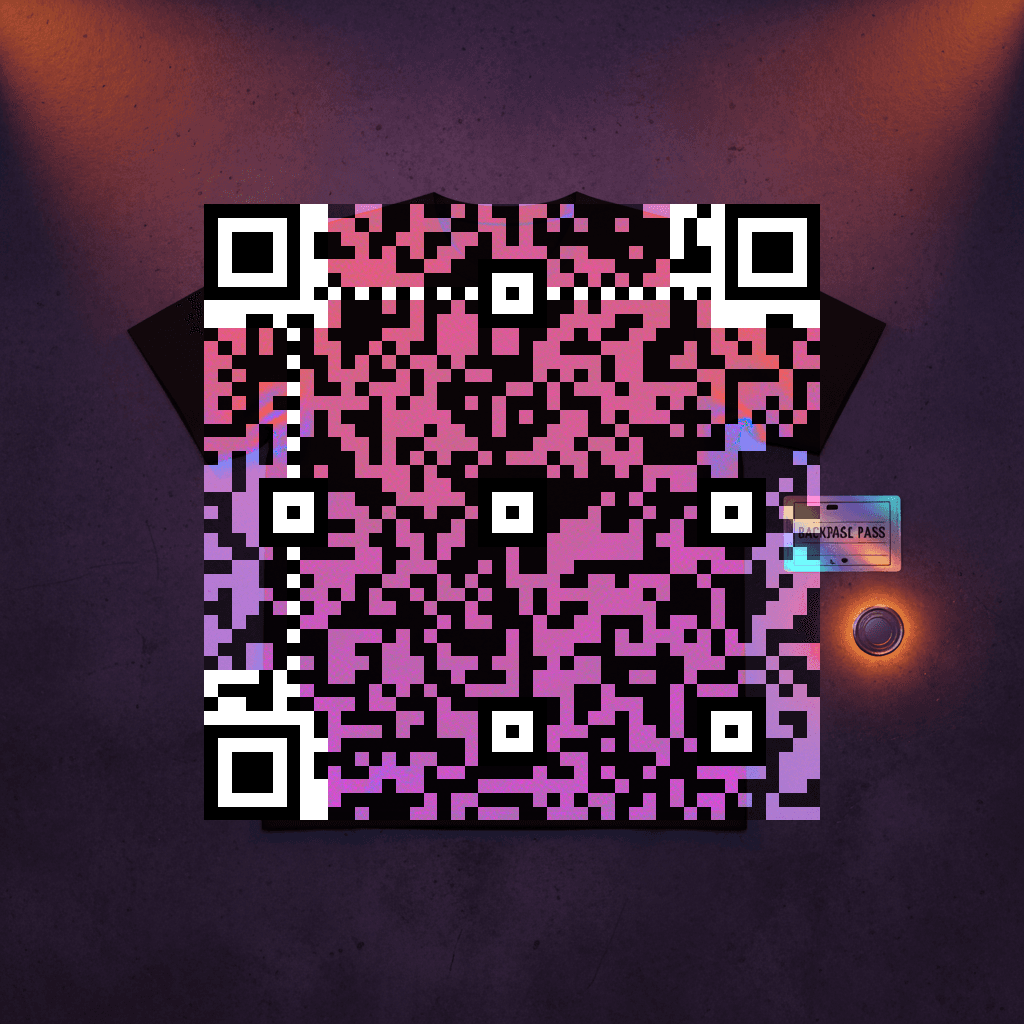
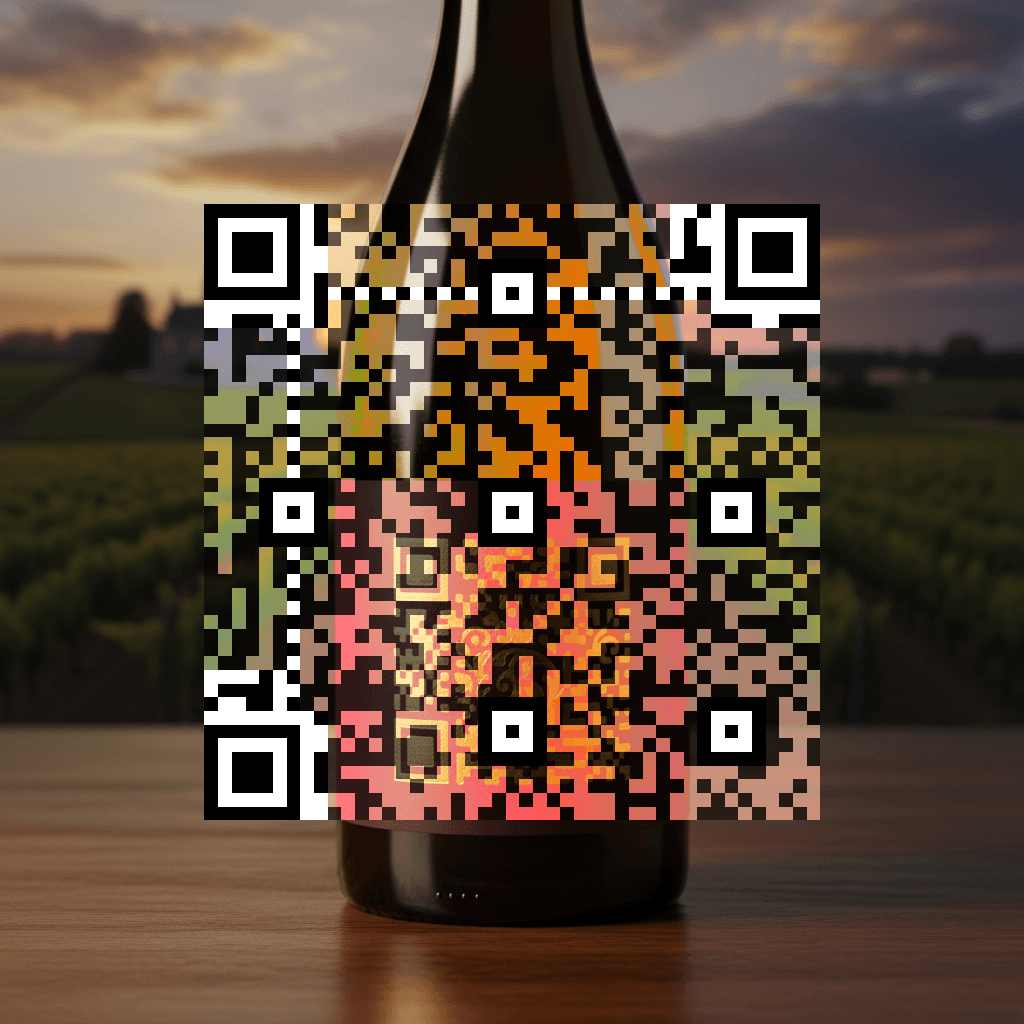
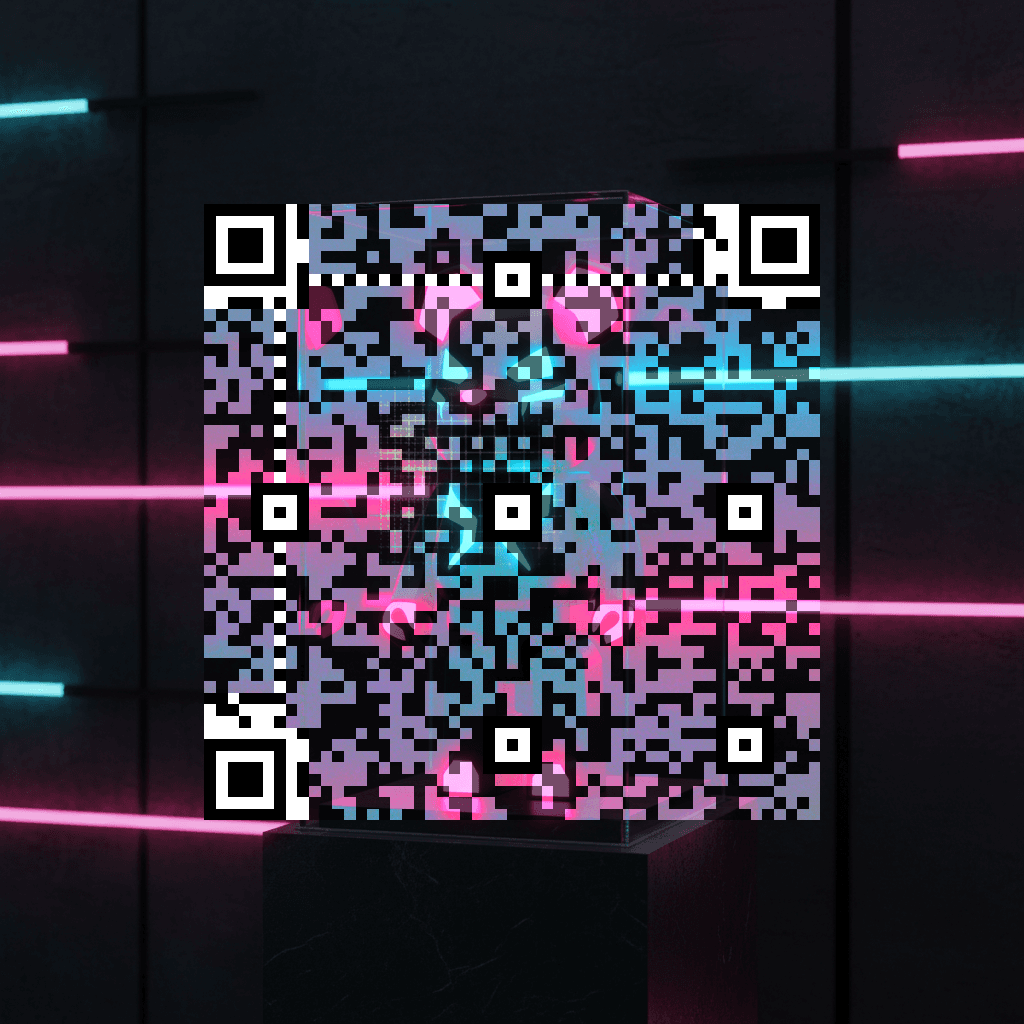
Why photocopies fail
A standard QR code is a grid of black and white squares. Copy it with any printer and you get a perfect clone. There is no information lost because there is no information density to lose.
Fractal QR is different. Each pattern is generated over the finite field GF(256) — the same algebraic structure used in Reed-Solomon error correction. Data is encoded not just in the position of marks, but in the precise geometry of nested sub-patterns. These sub-patterns exist at scales that approach the resolution limit of consumer printing.
When you photocopy a fractal QR label, the printer cannot reproduce the fine-grained structure. The entropy of the pattern measurably decreases. The verification algorithm detects this entropy loss and flags the copy — no database query needed, no network connection required.